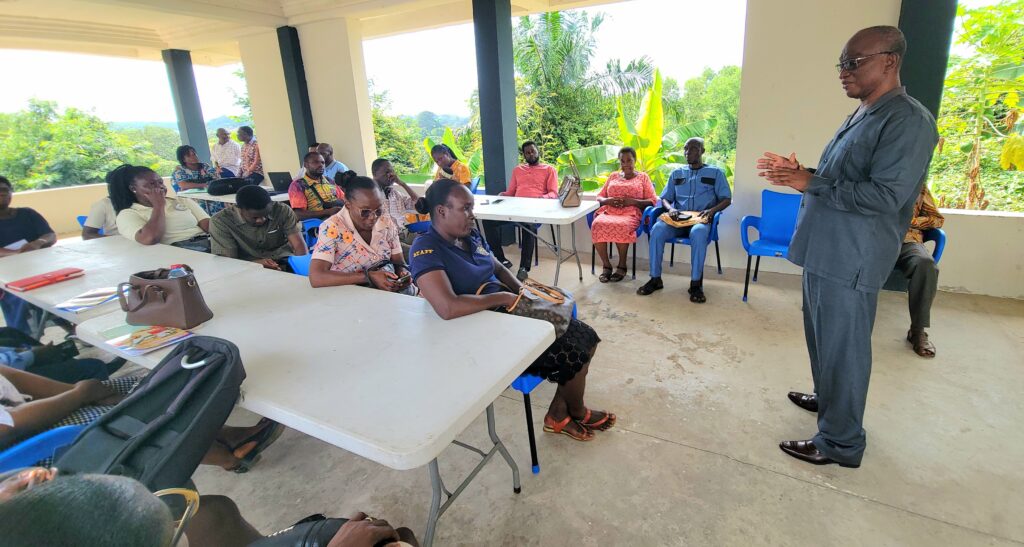
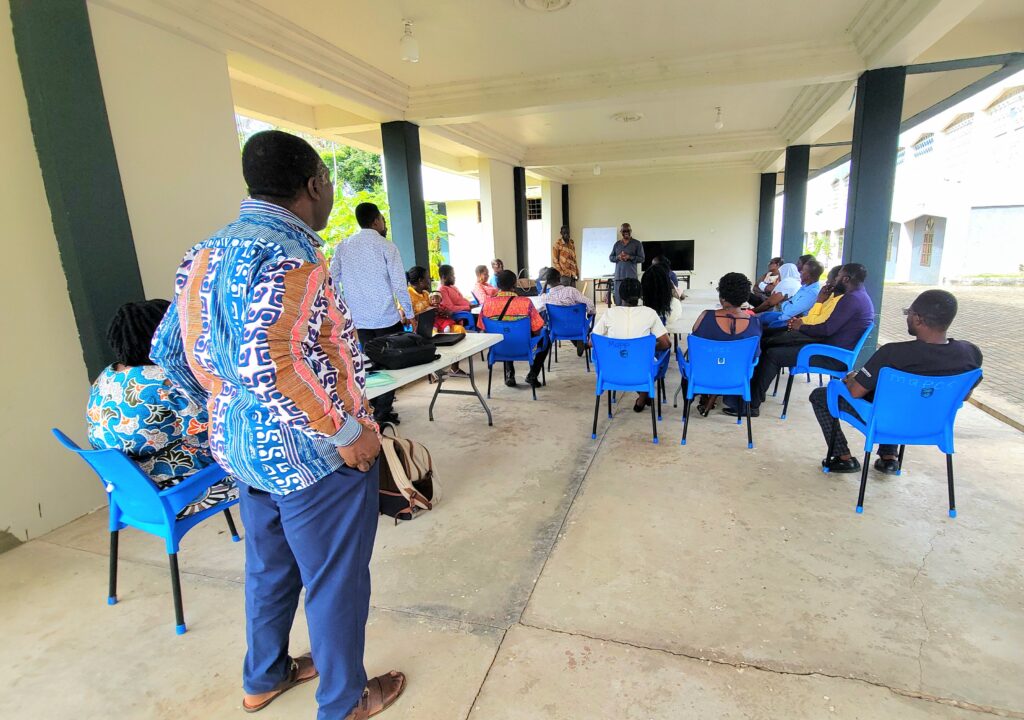
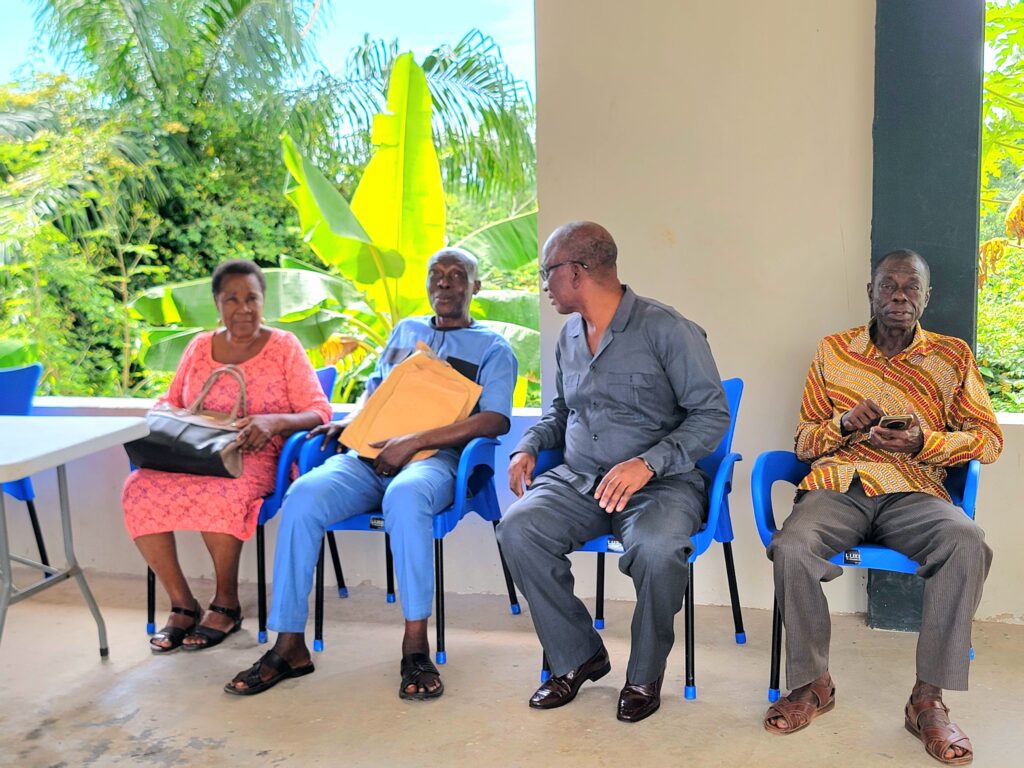
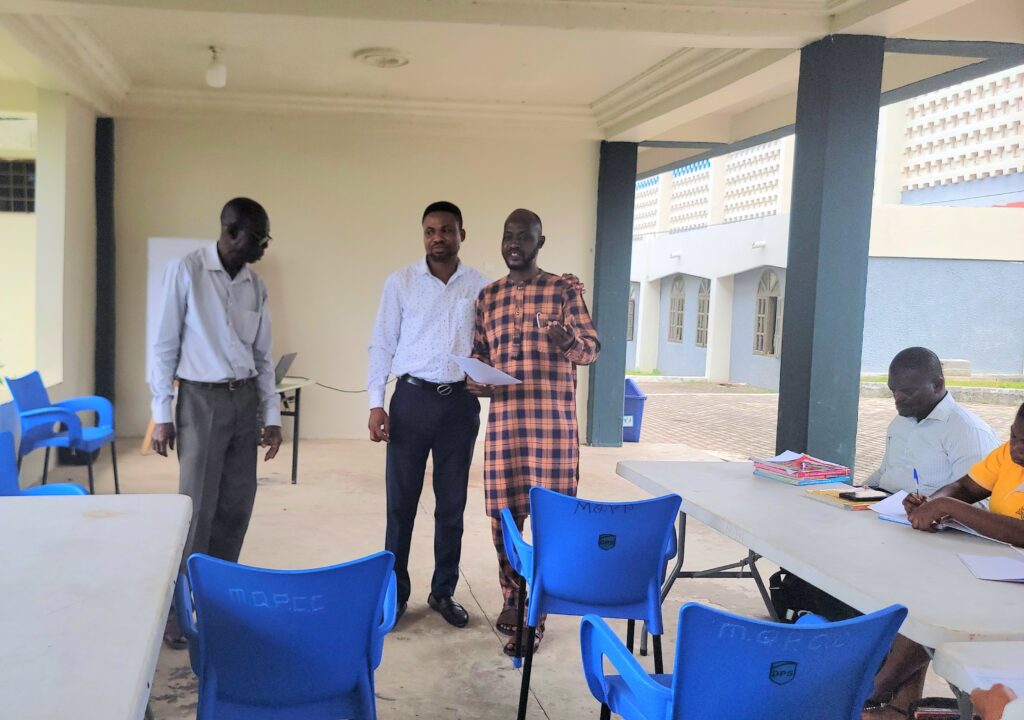
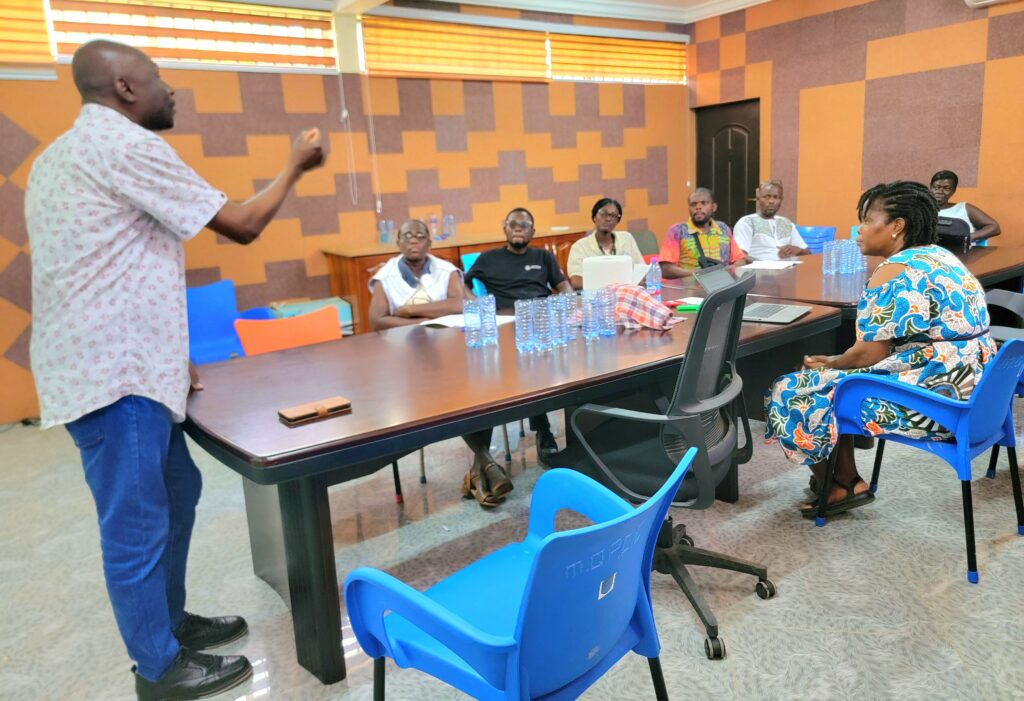
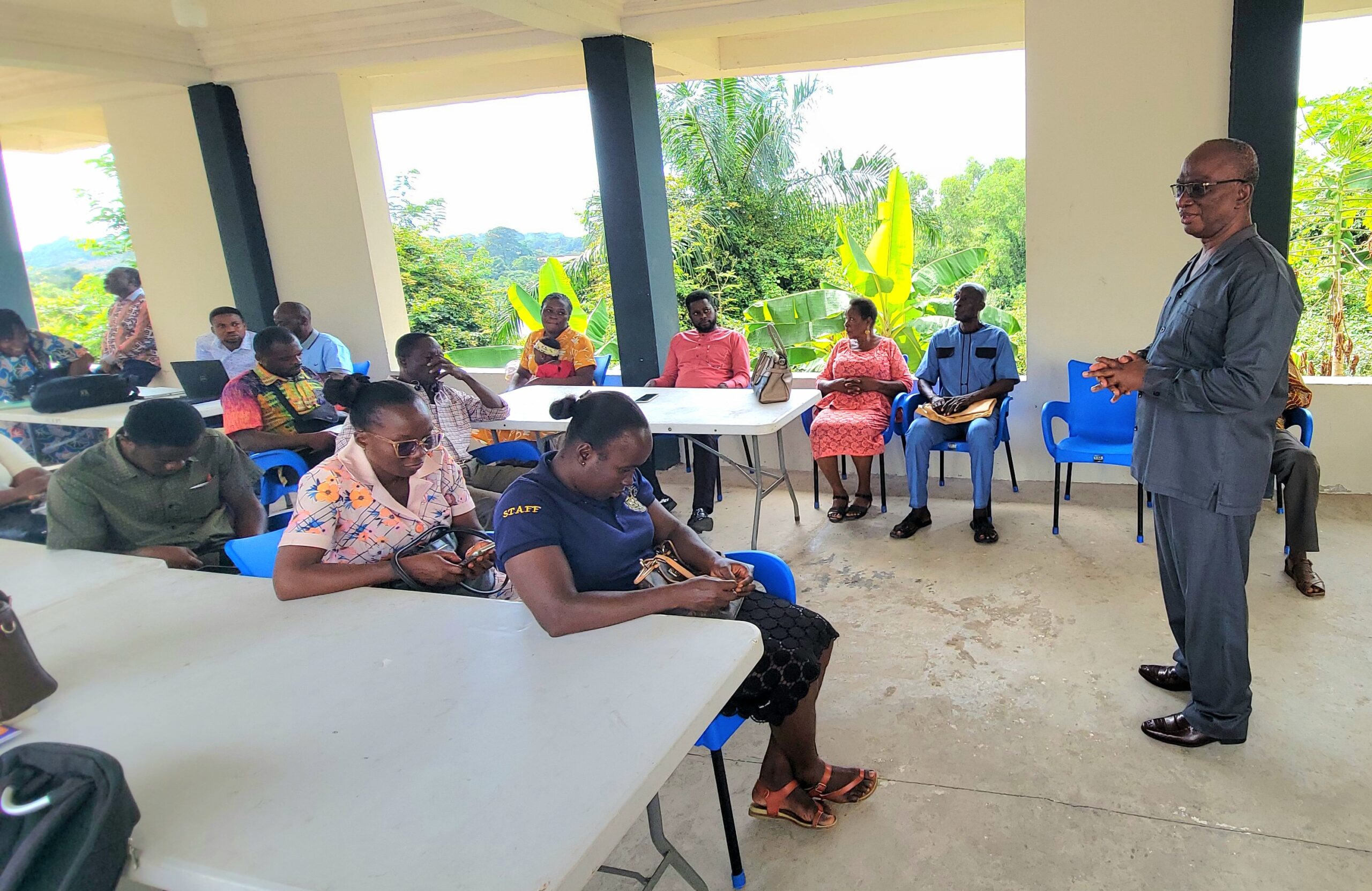
On 23rd and 24th September 2026, CAFDIL organised a two-day professional development workshop for teachers from its assisted primary schools across the seven coastal districts of Ghana’s Central Region. Held under the theme “Bridging Theory with Practice: The NaCCA Curriculum in Dialogue with Teachers in the Field,” the workshop aimed to strengthen teachers’ professional competence by deepening their understanding of the theoretical foundations that underpin effective classroom practice. The programme provided a structured platform for critical engagement with key educational concepts and their application within the framework of the NaCCA curriculum.
The workshop featured three core subject areas: English, Mathematics and Science. The English session focused on “Explaining Principles of Language Acquisition Relevant to Primary School Children Learning English as a Second Language (L2),” while the Mathematics session examined “The Nature and Aims of Mathematics Education.” The Science session addressed “The Nature of Scientific Enquiry.” In each instance, the resource persons deliberately demonstrated the relationship between theory and practice, emphasising that sound theoretical understanding enhances the focus, coherence and effectiveness of classroom instruction. Consistent reference was made to the NaCCA curriculum, particularly its strands, sub-strands, content indicators and exemplars, to illustrate how theoretical principles can be translated into meaningful learning experiences and appropriate pedagogical strategies.
The Participants exhibited a high level of enthusiasm and professional engagement throughout the workshop. Discussions reflected a genuine appreciation of the importance of theoretical knowledge in informing classroom practice, while practical activities enabled teachers to contextualise and apply key concepts within their own teaching environments. By linking educational theory with curriculum implementation, the workshop strengthened participants’ capacity to deliver purposeful, learner-centred instruction and further advanced CAFDIL’s commitment to improving educational quality in its assisted schools.